Address: Victoria 3064, Australia
Tel: +61 42012 9435
ACN
634 651 031
ABN: 24 634 651 031

Address: Victoria 3064, Australia
Tel: +61 42012 9435
ACN
634 651 031
ABN: 24 634 651 031
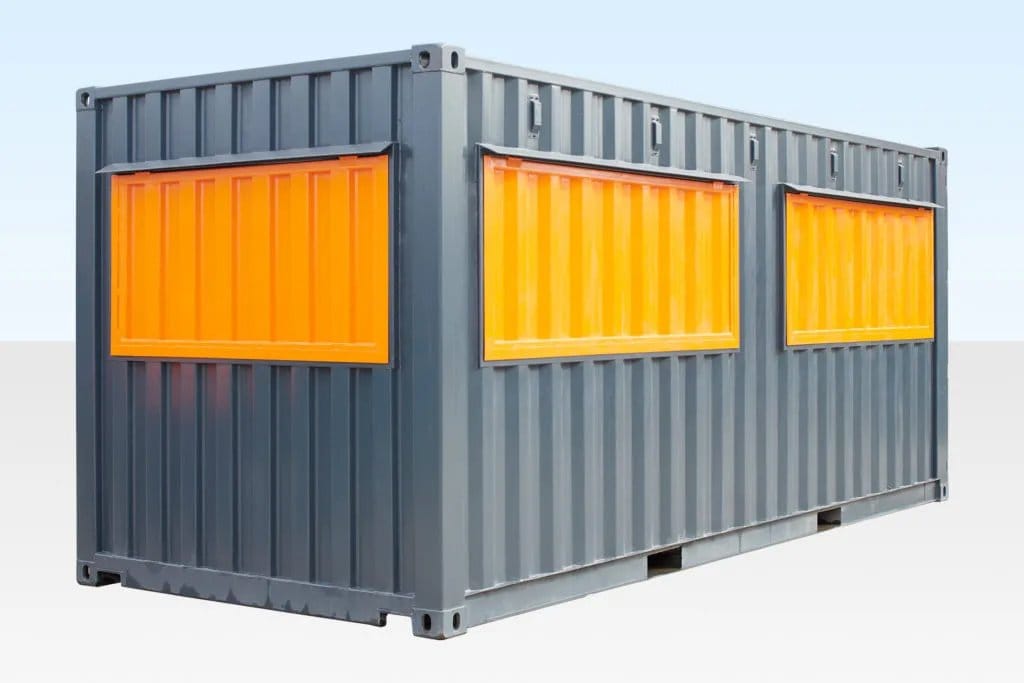
Self storage is convenient and it is easy to start. It is also a bill that arrives every month for as long as you need the space, and for a lot of Australians — renovators, tradespeople, farmers, small businesses, people between houses — that bill runs for far longer than they first expected. Buying a shipping container is the opposite: a larger cost once, then almost nothing. This guide gives you a method for working out which one is actually cheaper in your situation, rather than a marketing answer.
Self storage is a recurring cost: a monthly fee, usually with an administration fee at sign-up, often with mandatory insurance, and typically with an annual increase. You do not own anything at the end. The advantages are real — no delivery, no site, no maintenance, climate-controlled buildings in some facilities, and you can walk away with a month’s notice.
A shipping container is a capital cost: the container, plus a one-off flat A$450 delivery, plus whatever you spend levelling the ground. After that the running cost is close to zero — there is no rent, no access fee and no time limit. At the end you still own a steel asset with a resale value. The trade-offs are that you need somewhere to put it, you need truck access, and depending on your council you may need approval.
The calculation is simple enough to do on a phone. Take the total up-front cost of the container option, then divide by the monthly self storage rate you have actually been quoted:
Break-even in months = (container price + A$450 delivery + site preparation) ÷ monthly storage fee
Use the price on the unit you would actually buy and the rate you have actually been quoted — not averages from an article. Two worked examples using live prices from our range:
Substitute your own figures. Current prices for every size and grade are on the product pages, and our 2026 Australian container price guide explains why the same size varies so much between quotes.
Self storage units are sold in square metres of floor area, containers in cubic metres of volume, and the two are easy to confuse. A 20ft container gives about 13.8 m² of floor and about 33.1 m³ of volume with 2,393 mm of internal height — which is more usable height than many self storage units, and it means you can stack. A 10ft container gives about 6.7 m² and 15.9 m³. Before you compare prices, work out which unit actually fits your stuff; our metric dimensions guide has the internal measurements, door openings and volumes for every size.
Be fair to the comparison and include these. Ground preparation: four bearing points — concrete pads, sleepers or besser blocks — under the corner castings, which is usually a small cost but not nothing. Delivery access: if a tilt-tray cannot get in, a crane or Hiab lift is quoted separately. Ventilation: passive vents at both ends, because a sealed steel box will sweat and condensation damage is cumulative. Fit-out: racking makes a container two or three times more usable, and lighting makes it usable at all after dark — both are in our container accessories range. Approval: for plain storage on a residential block this is often straightforward, but it varies by council and state, so check our state-by-state council approval guide before you order.
If the container is holding boxes rather than being looked at, used is almost always the right answer. A wind & watertight unit is dry, secure and structurally sound — it simply carries the marks of the working life it has already had, and it costs substantially less than one-trip stock. Our range of used shipping containers is where most storage buyers end up, and our comparison of new versus used containers and our guide to what the grades actually mean will keep you from overpaying for a condition you do not need.
Most household and small business storage lands on a 20ft container — roughly a single garage, and the best value per cubic metre of any size. Tight blocks, courtyards and side passages are where a 10ft container or one of our 8ft x 10ft units earns its place, because it needs about six metres of clear run rather than twelve. Big jobs and machinery go to a 40ft container, and anything tall is better in a high-cube.
Under six months, rent. Over a year, buy — the break-even on a used 20ft against a typical mid-size self storage unit usually lands somewhere between eight and eighteen months, and after that the container is free storage that you own. In between, it comes down to whether you have somewhere to put it and whether the truck can get in. If a shed or a transportable building is also on your list, our wider comparison of a shipping container versus a shed, a transportable building and self-storage sets those options side by side; this guide is specifically about the rent-versus-buy decision. Work out your own number using the formula above, then browse the range or tell us your suburb and what you are storing and we will quote it properly.
